
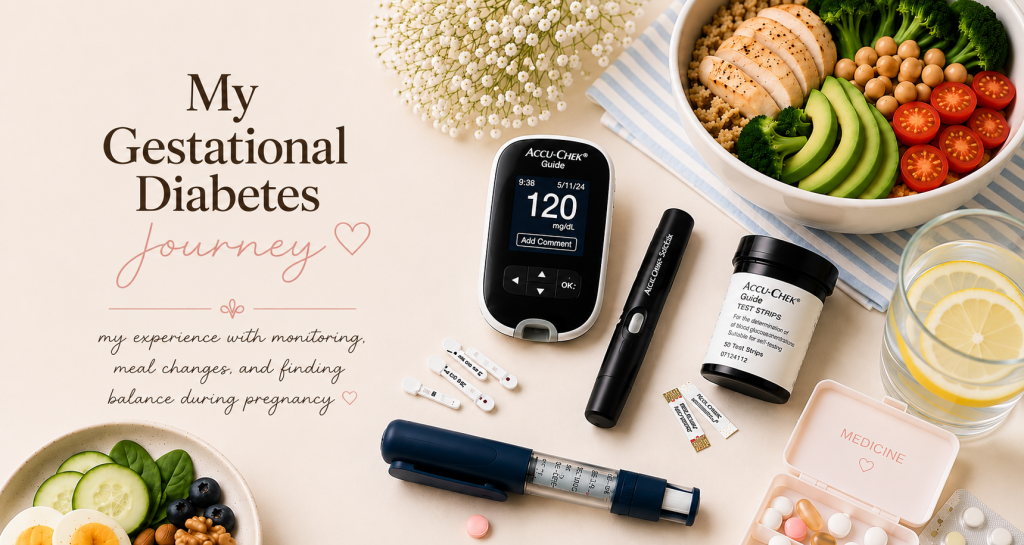
My Gestational Diabetes Journey ♡
This is one of those pregnancy experiences I never expected to write about, but it became such a big part of my journey. Before pregnancy, I considered myself healthy. I had no blood sugar issues, no major health problems, and I truly did not expect gestational diabetes to become part of my story.
This is only my personal experience and not medical advice. Gestational diabetes should always be managed with your gynecologist, diabetologist, or healthcare provider. Please do not change your diet, fasting routine, medication, metformin, insulin, supplements, or glucose-monitoring schedule without medical guidance.
The morning everything changed
It was a beautiful morning during my 26th week of pregnancy. I was getting ready for a regular visit to my gynecologist, and like every appointment, I was excited. Those visits always made me emotional because I could see my baby on the ultrasound and hear how she was growing.
At every appointment, I had to bring a urine sample. That day, my glucose suddenly appeared higher than normal. I still remember feeling confused because I had never had sugar problems before pregnancy. My doctor asked me to go for the oral glucose tolerance test, which is usually done during pregnancy around this stage.
My appointment was very early in the morning. I finished dinner early the previous evening and then only had water. At the clinic, they first took my blood and asked me to wait. I sat there scrolling through my phone, trying not to overthink. After about 15–20 minutes, the nurse came and told me I had failed the first part and could not continue the test.
I felt heartbroken. I remember thinking, “Did I do something wrong to my body?” There were other pregnant women waiting too. Some passed, and one more woman failed like me. Strangely, that made me feel a little less alone.
Failing the second test too
My gynecologist asked me to repeat the test because my reading was only slightly above the required range. It was not dangerously high, but it still needed attention.
Before the second test, I started reading more about fasting glucose. I learned that for some women, long overnight fasting can sometimes make morning glucose harder to control. During pregnancy, hormones can make the body more insulin resistant, and early morning glucose readings can be affected by what is often called the dawn phenomenon.
I went for the second test with hope, but unfortunately, I failed again by a small margin. Even though it was only slightly above the range, I felt disappointed and scared. I kept wondering why this was happening when I was trying so hard to take care of myself and my baby.
My gynecologist then referred me to a diabetologist. That was the beginning of monitoring, meal changes, readings, appointments, and learning how my body reacted to different foods.
Learning how to eat differently
My diabetologist guided me to focus more on balanced meals. I started adding protein and fibre with my carbohydrates instead of eating carbs alone. I became more mindful of how different foods affected my readings.
I added more eggs, fish, chicken, tofu, cheese, yoghurt, whole grains, beans, chickpeas, nuts, and other protein-rich foods. I tried not to skip meals, and I focused on building every meal around balance rather than fear.
One thing I noticed was that my post-meal glucose was usually fine when my portions were balanced. But if I ate too much rice or too many carbs at once, my readings could shoot up. That taught me that balance mattered more than completely punishing myself.
I have a sweet tooth, and honestly, it was very hard for me to completely avoid sweets. Sometimes I ate a small piece of chocolate after meals, and surprisingly, my post-meal readings still stayed within range. But large carb-heavy portions affected me much more.
My fasting glucose struggle
The most frustrating part for me was fasting glucose. I could manage most post-meal readings, but my morning fasting numbers were often higher.
Over time, I realized my body did better when I did not go too long overnight without eating. A small second dinner or bedtime snack helped me more than sleeping on an empty stomach.
Some of the snacks that worked for me were yoghurt with cheese, eggs, nuts, milk, or oats. I personally avoided fruits at night because natural sugar could affect my fasting readings. But again, every woman reacts differently, so this is something to discuss with your diabetologist.
Another thing that helped was gentle movement. After meals, I would walk from one room to another, around the balcony, or in a nearby park. It helped me digest better and also helped me stay active without doing anything too intense.
Monitoring became part of my routine
I had regular consultations with my diabetologist, usually every two weeks. I shared my readings, and if my glucose stayed high repeatedly, my medication or insulin dose was adjusted.
I was also given metformin. My doctor explained it to me as part of my treatment plan, and this is why I always say that gestational diabetes is something that should be managed with medical support, not guesswork.
I live in the Czech Republic, and my health insurance covered many of the medical products I needed — including the glucose monitor, test strips, and lancet pen. That was a huge relief because pregnancy already comes with so many expenses.
If you are going through something similar, I really encourage you to check what your health insurance covers. Sometimes we do not realize that important medical items may already be included.
What Happened Next?
The diagnosis that worried me the most, the monitoring that followed, and how I eventually reached full term.
Everything I packed for labour, postpartum recovery, and bringing my baby girl home.
Recovery, feeding, newborn life, and the products I actually used during those early months.
Products That Helped Me Monitor My Glucose ♡
These were the three practical items that became part of my daily routine. They helped me track my fasting glucose and after-meal readings, and made it easier to share my numbers with my diabetologist.
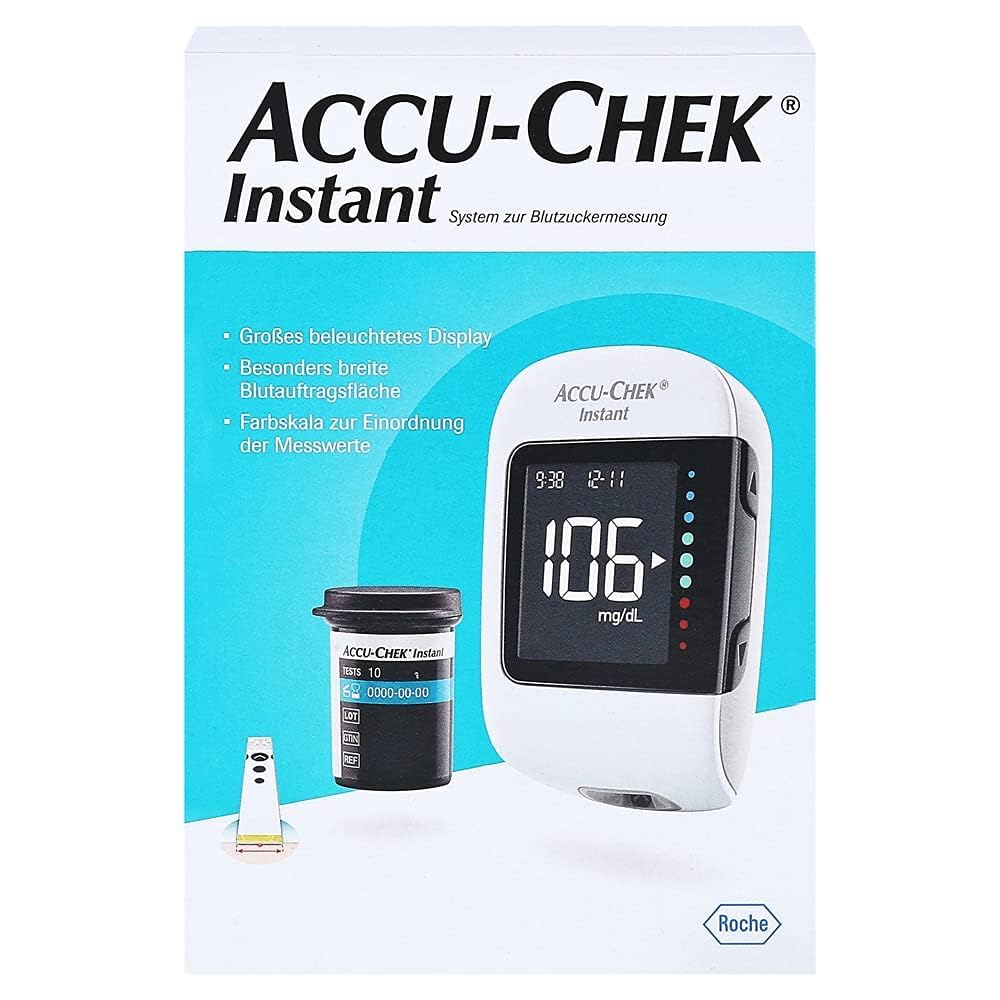
Accu-Chek glucose monitor
The glucose monitor became part of my everyday pregnancy routine. I used it in the morning for fasting glucose and again after meals, depending on the schedule my diabetologist gave me.
What I personally liked about the Accu-Chek monitor was that it could connect with a mobile app. Every time I measured my glucose, the reading went into the app, which made tracking easier and saved me from manually writing everything down.
VIEW GLUCOSE MONITOR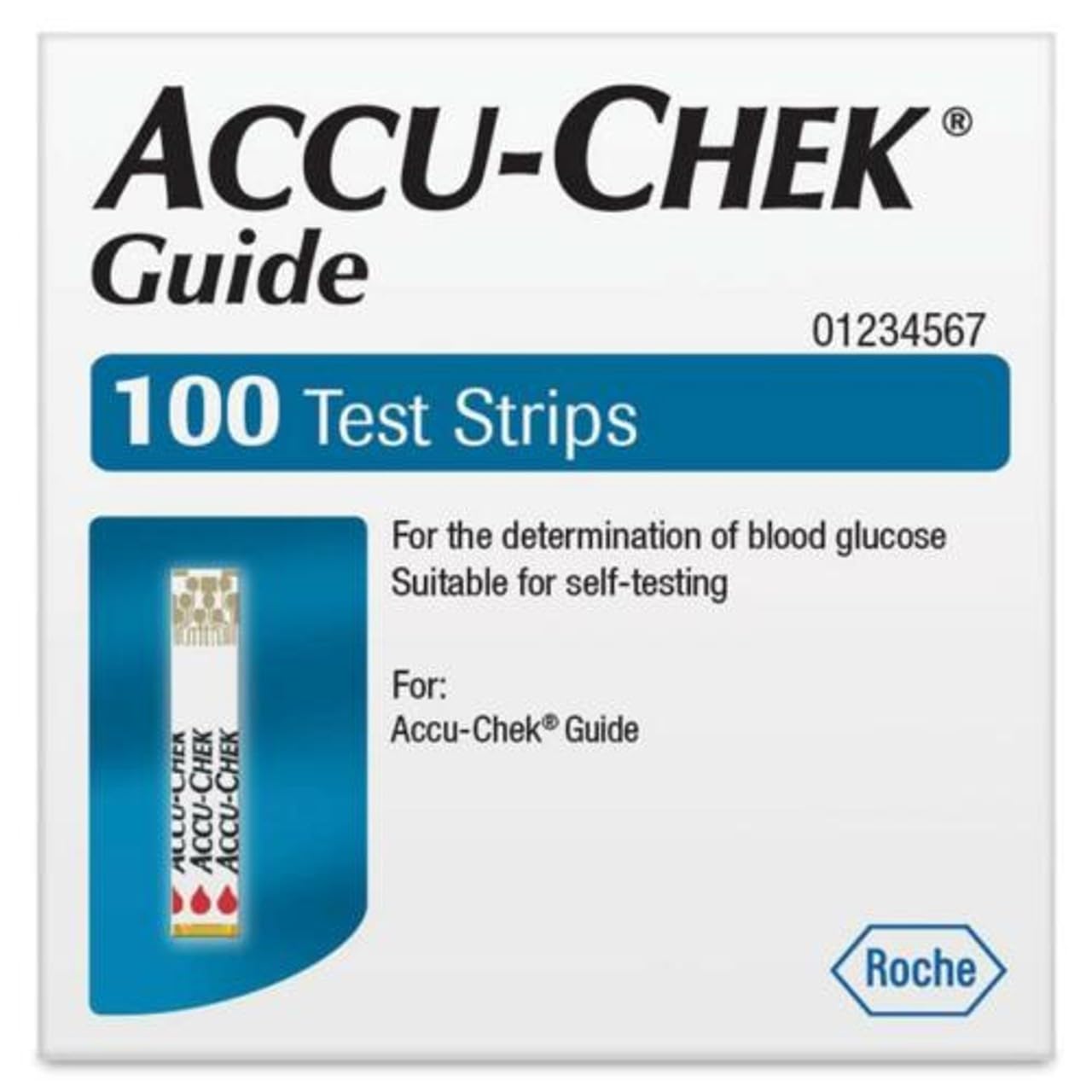
Accu-Chek test strips
Test strips were something I needed constantly because monitoring happened several times a day. I used them with the glucose monitor to check my readings quickly.
Since these are used regularly, it is worth checking whether your health insurance covers them. If not, I would still consider them essential if your doctor asks you to monitor your gestational diabetes at home.
VIEW TEST STRIPS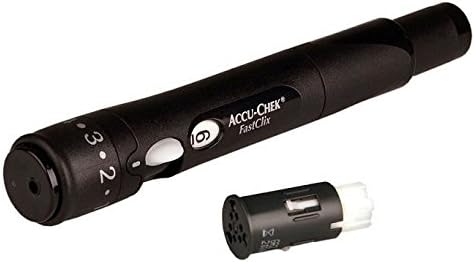
Accu-Chek lancet pen
The lancet pen made finger-prick testing much easier to manage. I did not have to deal with changing syringes each time, and it felt more practical for daily monitoring.
I could adjust the setting and change the lancet as needed. For something I had to use so often, having a simple and easy-to-handle lancet pen made the whole routine feel less overwhelming.
VIEW LANCET PEN
Looking back, gestational diabetes felt overwhelming in the beginning, but slowly it became something I learned to manage with the support of my doctors, balanced meals, gentle movement, regular monitoring, and a lot of patience with myself.
I also do not want my experience to scare anyone who is reading this. For most women, blood sugar levels return to normal after delivery. However, my doctors explained that having gestational diabetes can increase a mother’s risk of developing type 2 diabetes later in life, which is why regular monitoring and follow-up check-ups remain important even after pregnancy.
I was also told that gestational diabetes may increase the chance of certain pregnancy and delivery complications, such as having a larger baby, a more difficult labour, or needing a cesarean delivery. The reassuring part is that proper management through balanced meals, gentle movement, glucose monitoring, and medication or insulin when recommended by your doctor can help keep blood sugar levels within a healthy range and reduce these risks.
And honestly, I want to pat myself on the back too. With all the finger pricks, food tracking, appointments, worries, and lifestyle changes, I did my best every single day. My baby girl was born healthy and not oversized, and I was able to give birth vaginally without complications. I am incredibly grateful for that.
If you are going through gestational diabetes right now, please do not blame yourself. Pregnancy hormones can affect how the body processes glucose, and many healthy women develop gestational diabetes despite doing everything “right.” Trust yourself, trust the process, lean on your healthcare team, and take it one day at a time. With the right support and guidance, it is absolutely possible to have a healthy pregnancy and a healthy baby. You have got this mama! 🙂
You May Also Enjoy
More helpful guides for baby essentials, development, feeding, and travel.
Baby Must-Haves
The baby products that genuinely made everyday life easier during the first year.
Playtime & Early Development
Toys, books, tummy time, and early development essentials for the 3–6 month stage.
Starting Solids & Feeding
High chair, bibs, bowls, cups, spoons, and feeding tools for the solids stage.
Books, Toys & Motor Skills
Thoughtful books and toys to support toddler movement, learning, and development.
Travel Essentials
Practical baby gear and travel products that make outings and family trips easier.
Stroller, Bassinet & Car Seat
My guide to choosing the big-ticket baby items for everyday life.
Baby Must-Haves
The baby products that genuinely made everyday life easier during the first year.
Playtime & Early Development
Toys, books, tummy time, and early development essentials for the 3–6 month stage.
Starting Solids & Feeding
High chair, bibs, bowls, cups, spoons, and feeding tools for the solids stage.
Books, Toys & Motor Skills
Thoughtful books and toys to support toddler movement, learning, and development.
Travel Essentials
Practical baby gear and travel products that make outings and family trips easier.
Stroller, Bassinet & Car Seat
My guide to choosing the big-ticket baby items for everyday life.